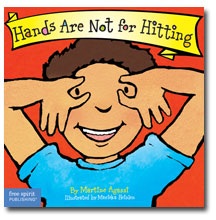
Hands Are Not for Hitting
Ages 1–4 • Board book
What it explores: The helpful, gentle things hands can do, with a clear message that hitting hurts.
Book detailsThe little reader collection · Family guide
12 books for the moments little ones find hard—from taking turns and saying goodbye to frustration, worries and settling down. Explore stories, age ranges and simple ways to talk together.
All nine slides in our reading-journal design.
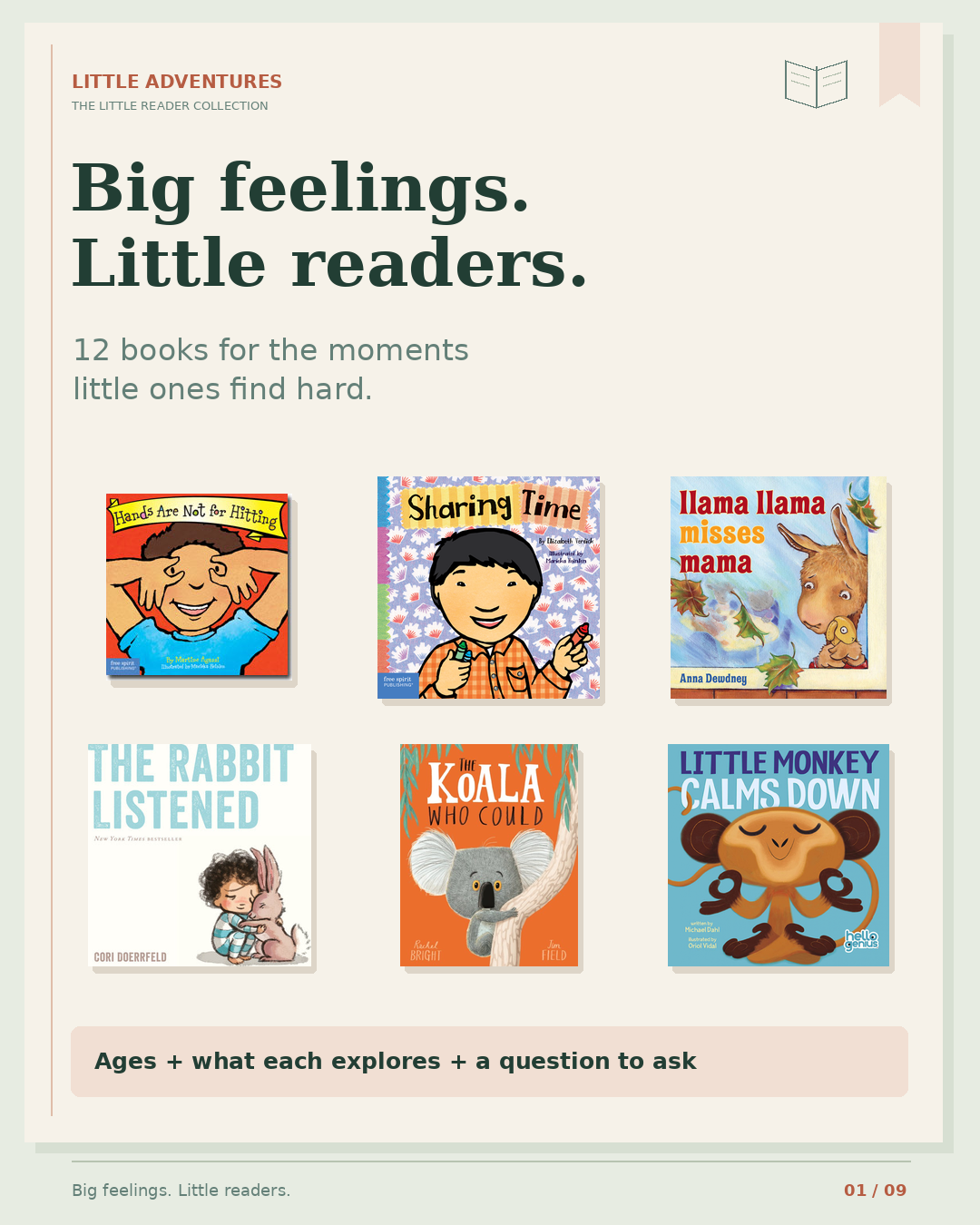
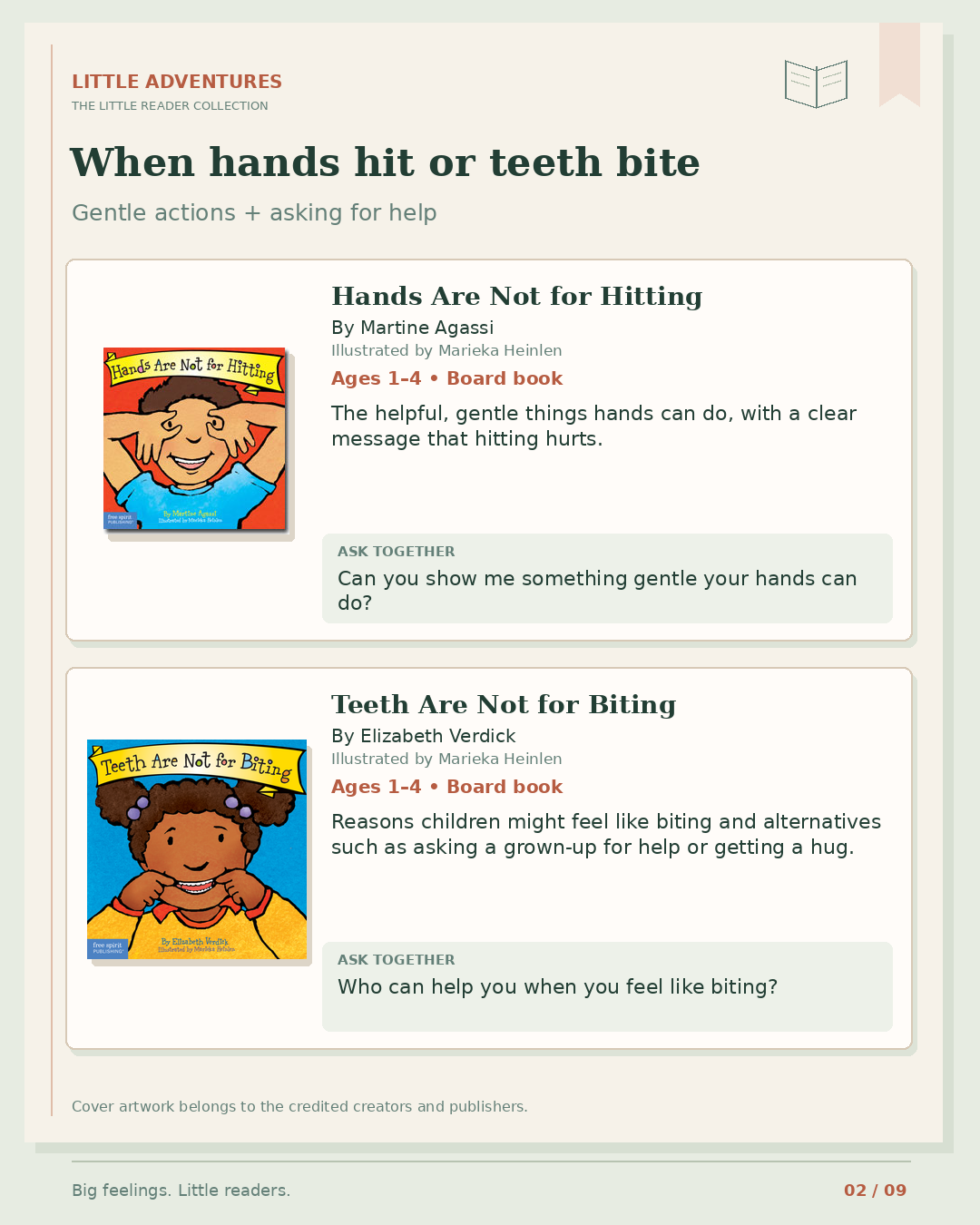
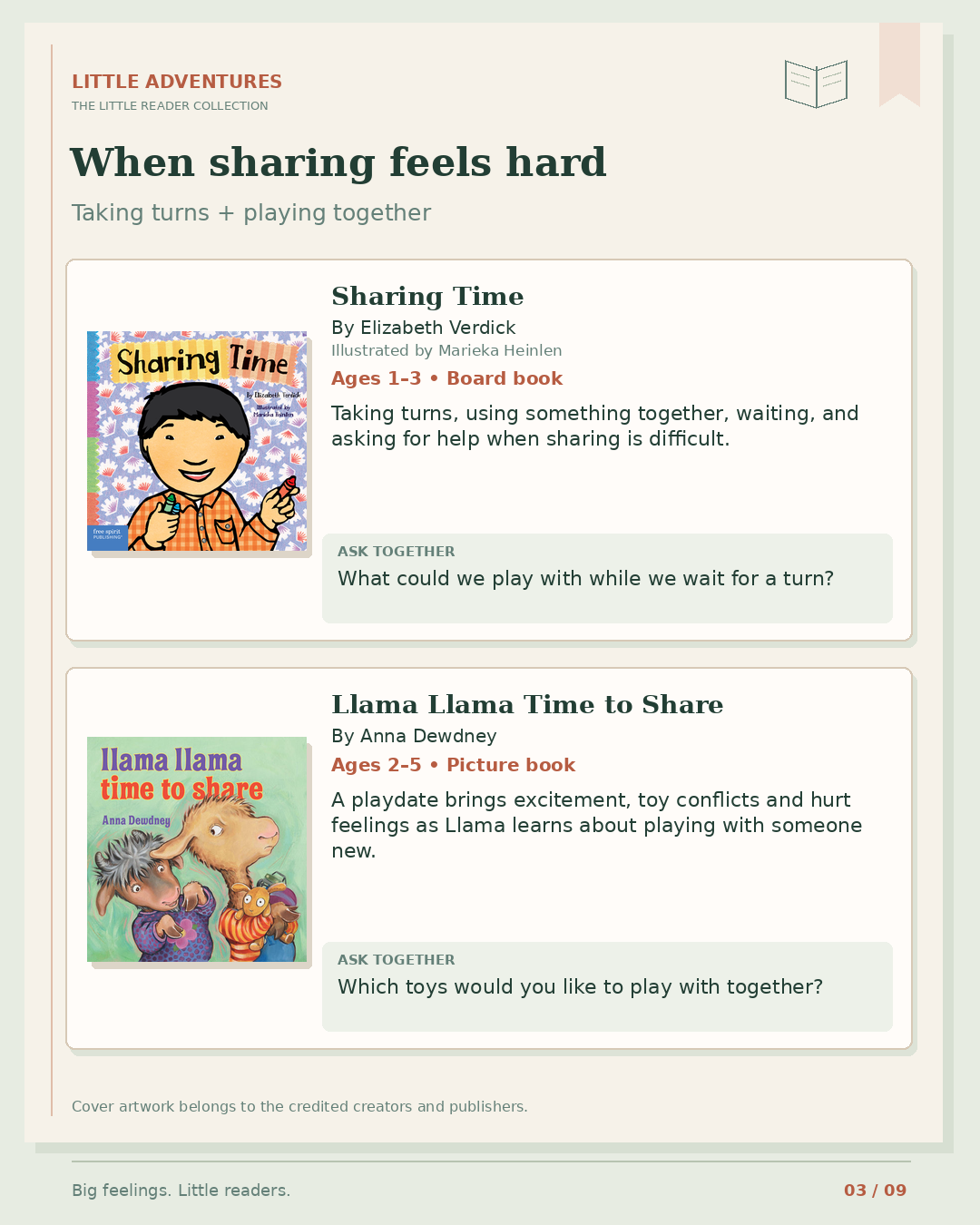
Swipe or scroll through the slides, or download the complete carousel.
Gentle actions + asking for help
Ages 1–4 • Board book
What it explores: The helpful, gentle things hands can do, with a clear message that hitting hurts.
Book details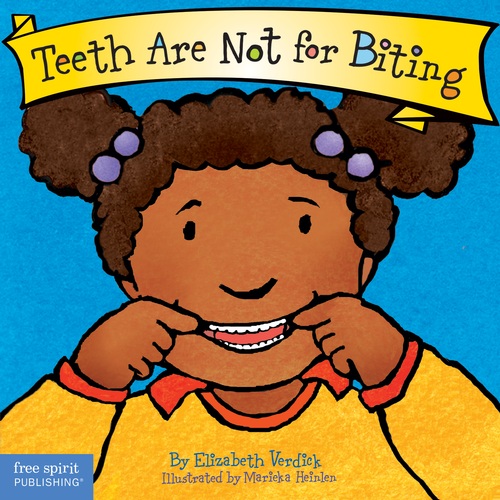
Ages 1–4 • Board book
What it explores: Reasons children might feel like biting and alternatives such as asking a grown-up for help or getting a hug.
Book detailsTaking turns + playing together
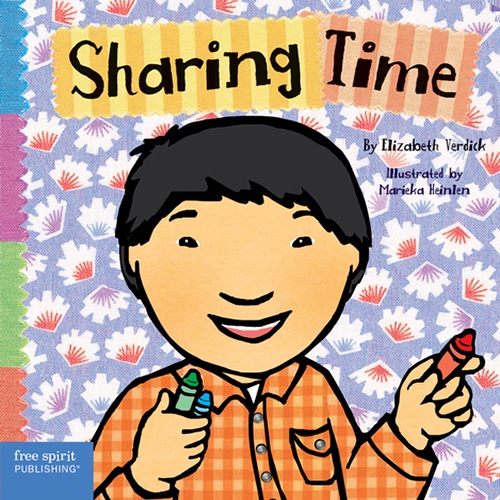
Ages 1–3 • Board book
What it explores: Taking turns, using something together, waiting, and asking for help when sharing is difficult.
Book details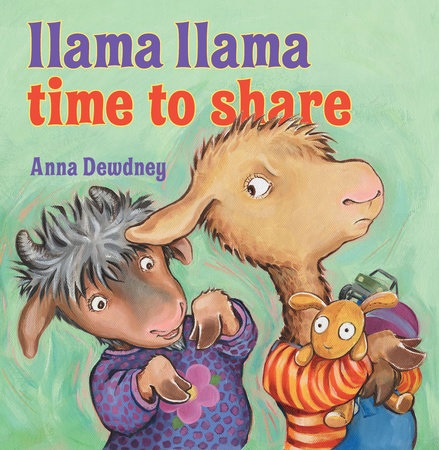
Ages 2–5 • Picture book
What it explores: A playdate brings excitement, toy conflicts and hurt feelings as Llama learns about playing with someone new.
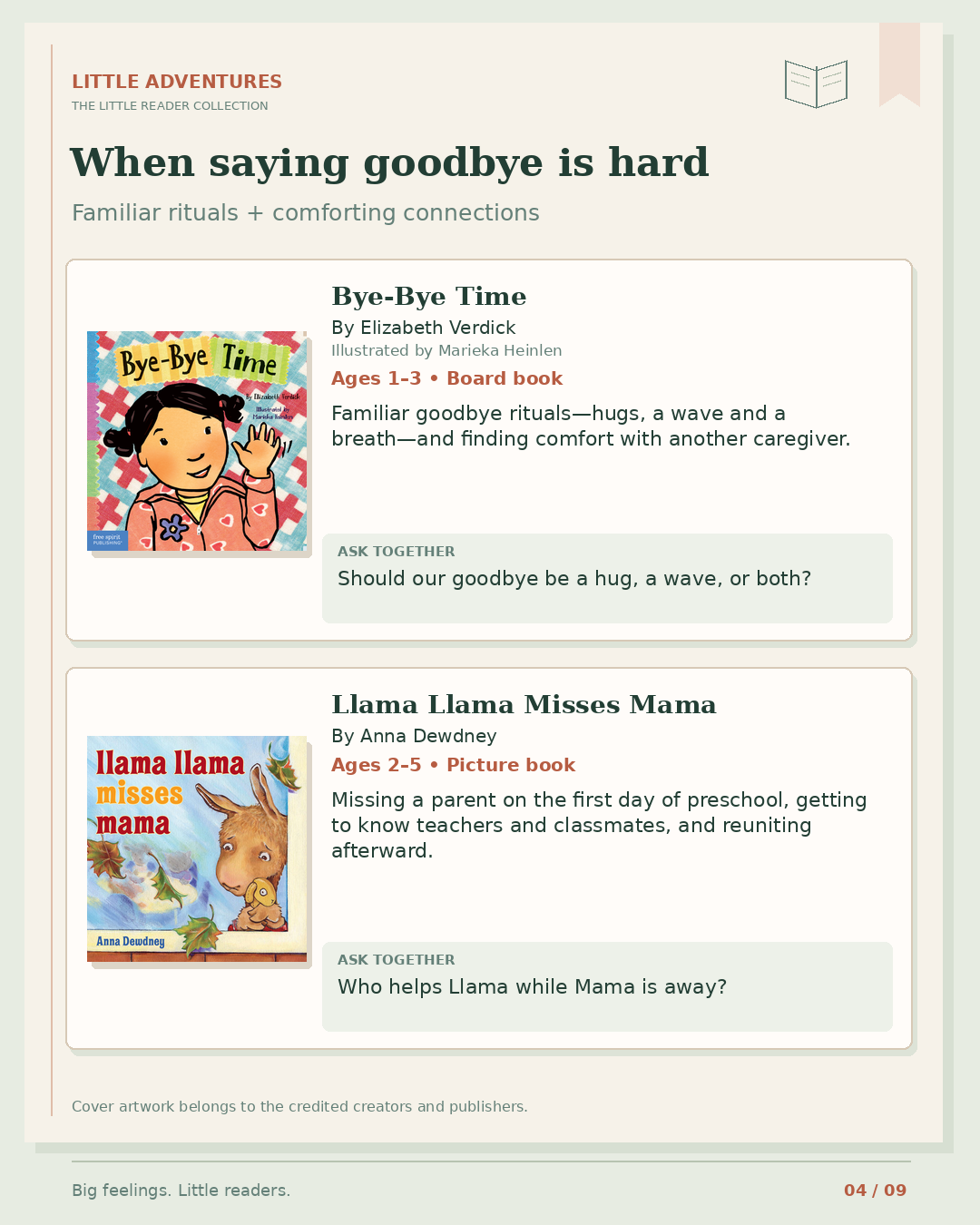
Book detailsFamiliar rituals + comforting connections
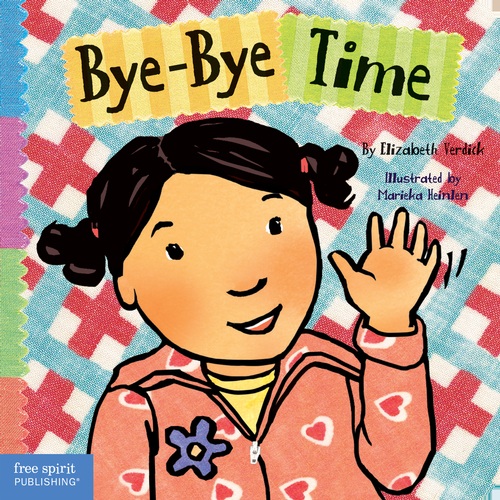
Ages 1–3 • Board book
What it explores: Familiar goodbye rituals—hugs, a wave and a breath—and finding comfort with another caregiver.
Book details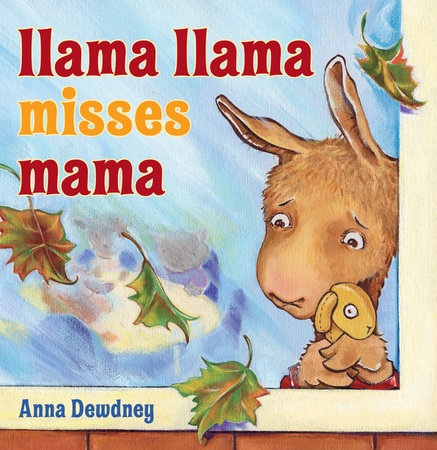
Ages 2–5 • Picture book
What it explores: Missing a parent on the first day of preschool, getting to know teachers and classmates, and reuniting afterward.
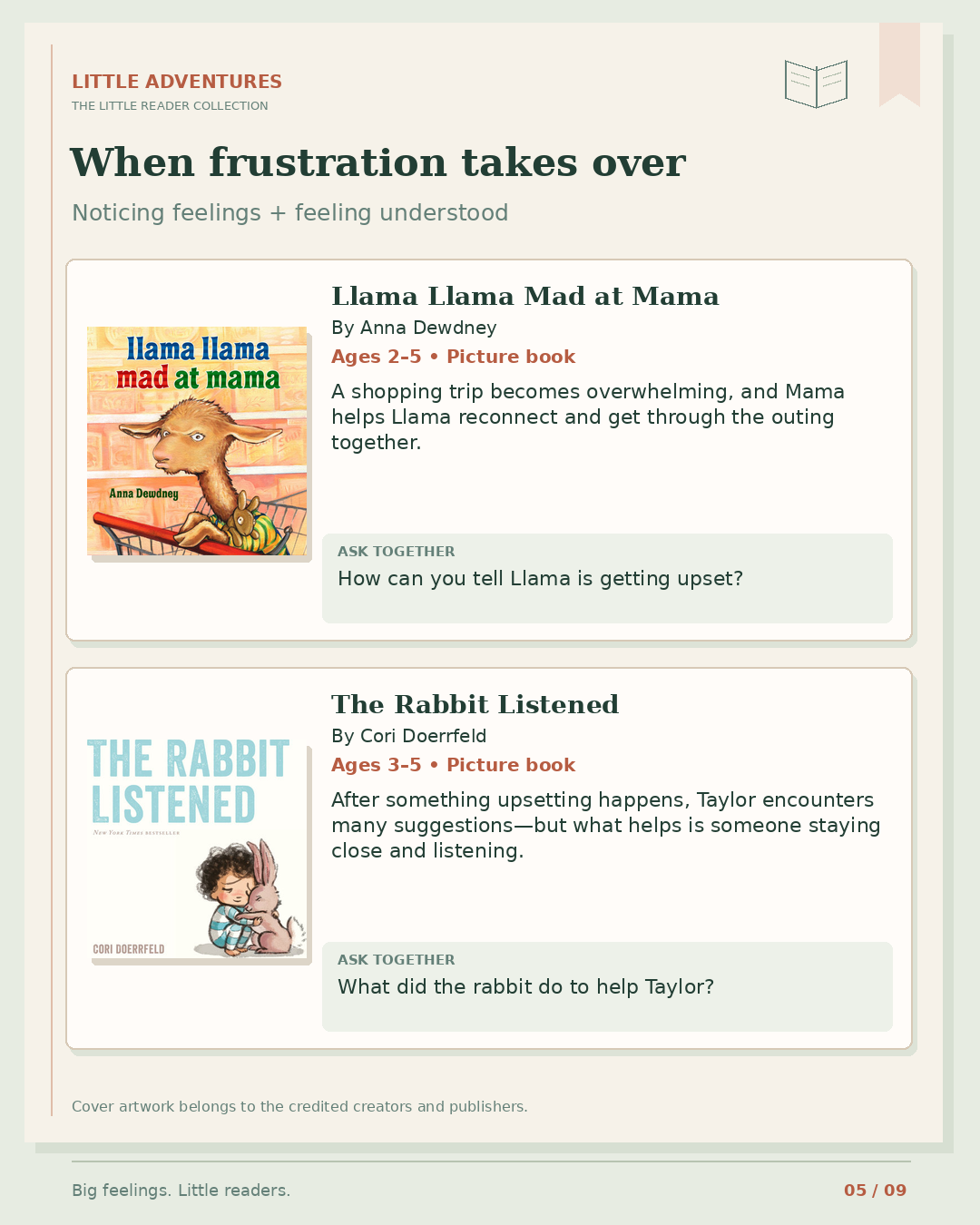
Book detailsNoticing feelings + feeling understood
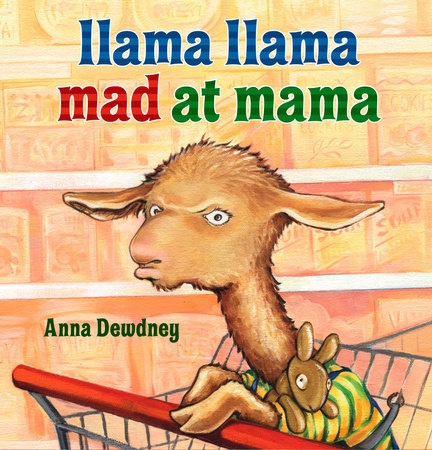
Ages 2–5 • Picture book
What it explores: A shopping trip becomes overwhelming, and Mama helps Llama reconnect and get through the outing together.
Book details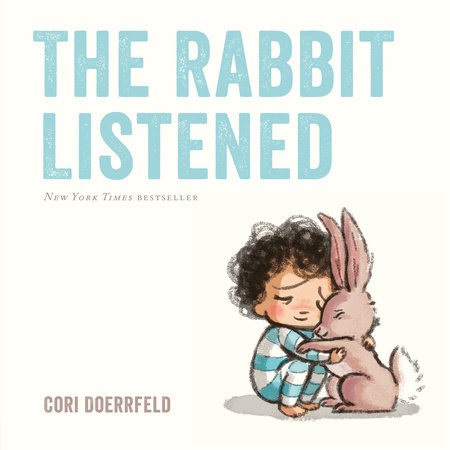
Ages 3–5 • Picture book
What it explores: After something upsetting happens, Taylor encounters many suggestions—but what helps is someone staying close and listening.
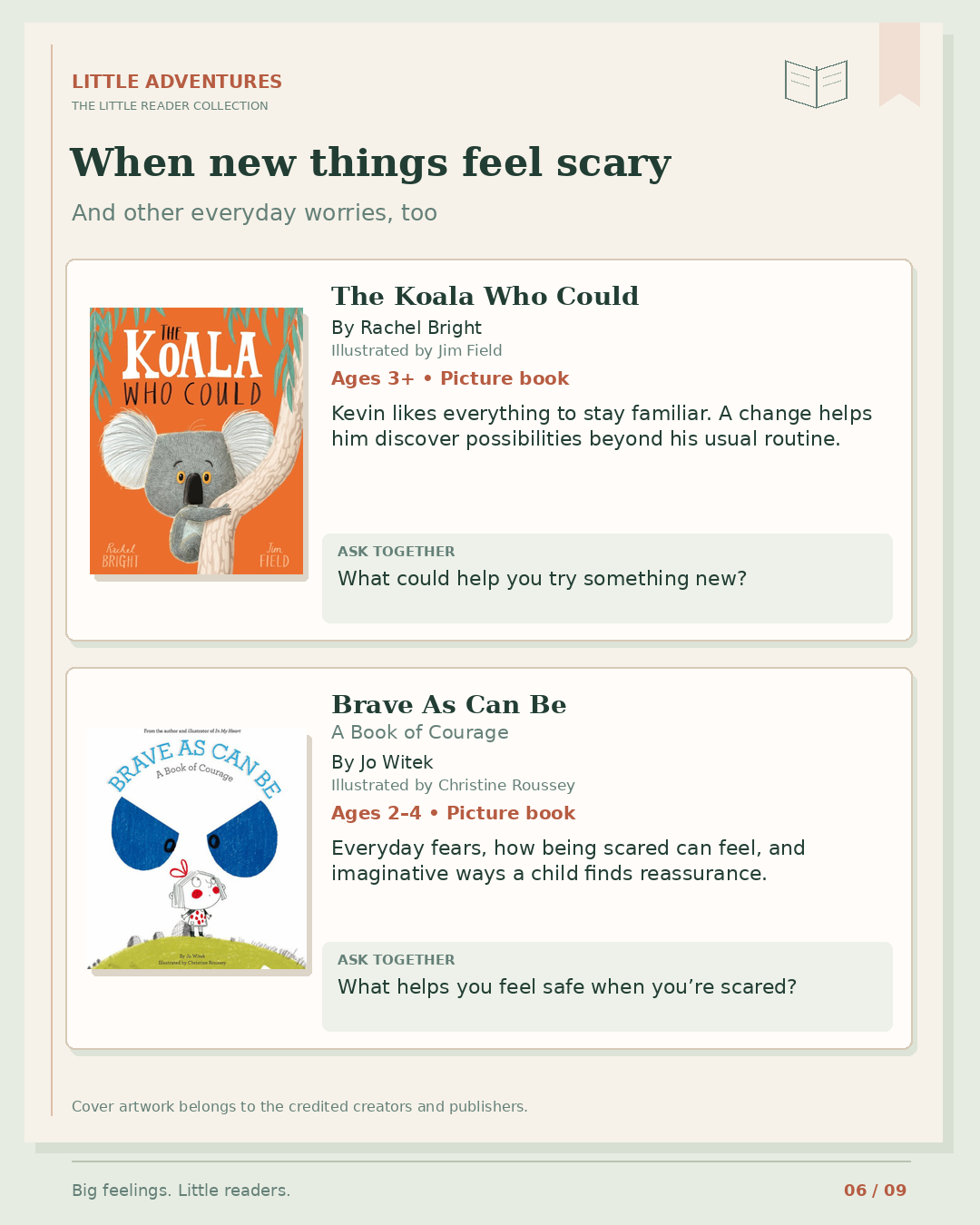
Book detailsAnd other everyday worries, too
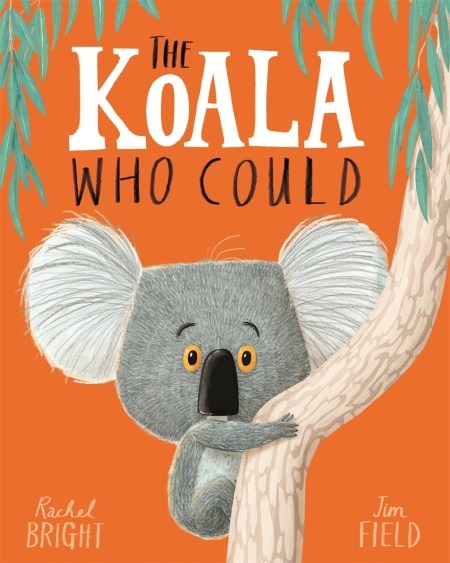
Ages 3+ • Picture book
What it explores: Kevin likes everything to stay familiar. A change helps him discover possibilities beyond his usual routine.
Book details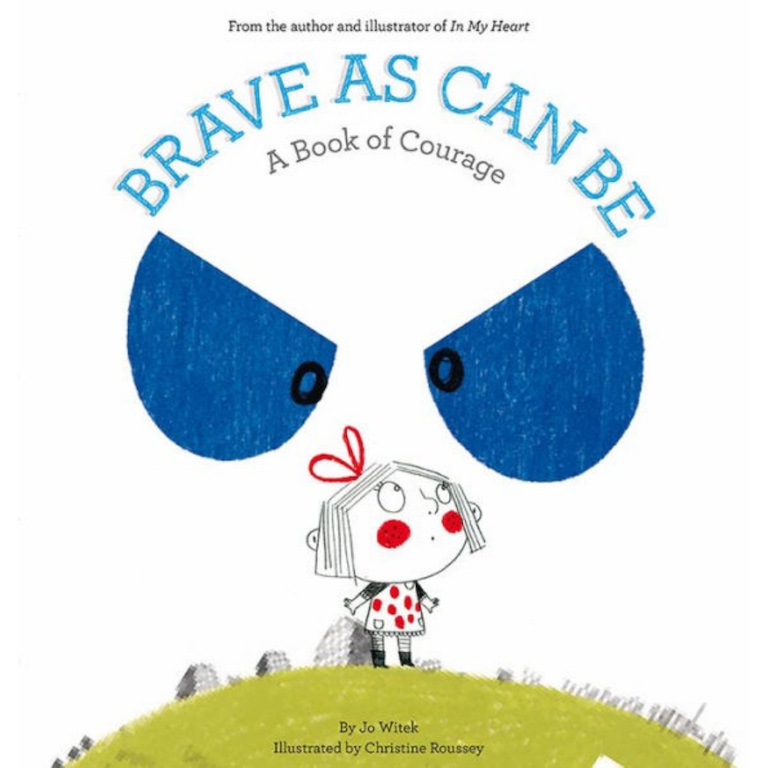
Ages 2–4 • Picture book
What it explores: Everyday fears, how being scared can feel, and imaginative ways a child finds reassurance.
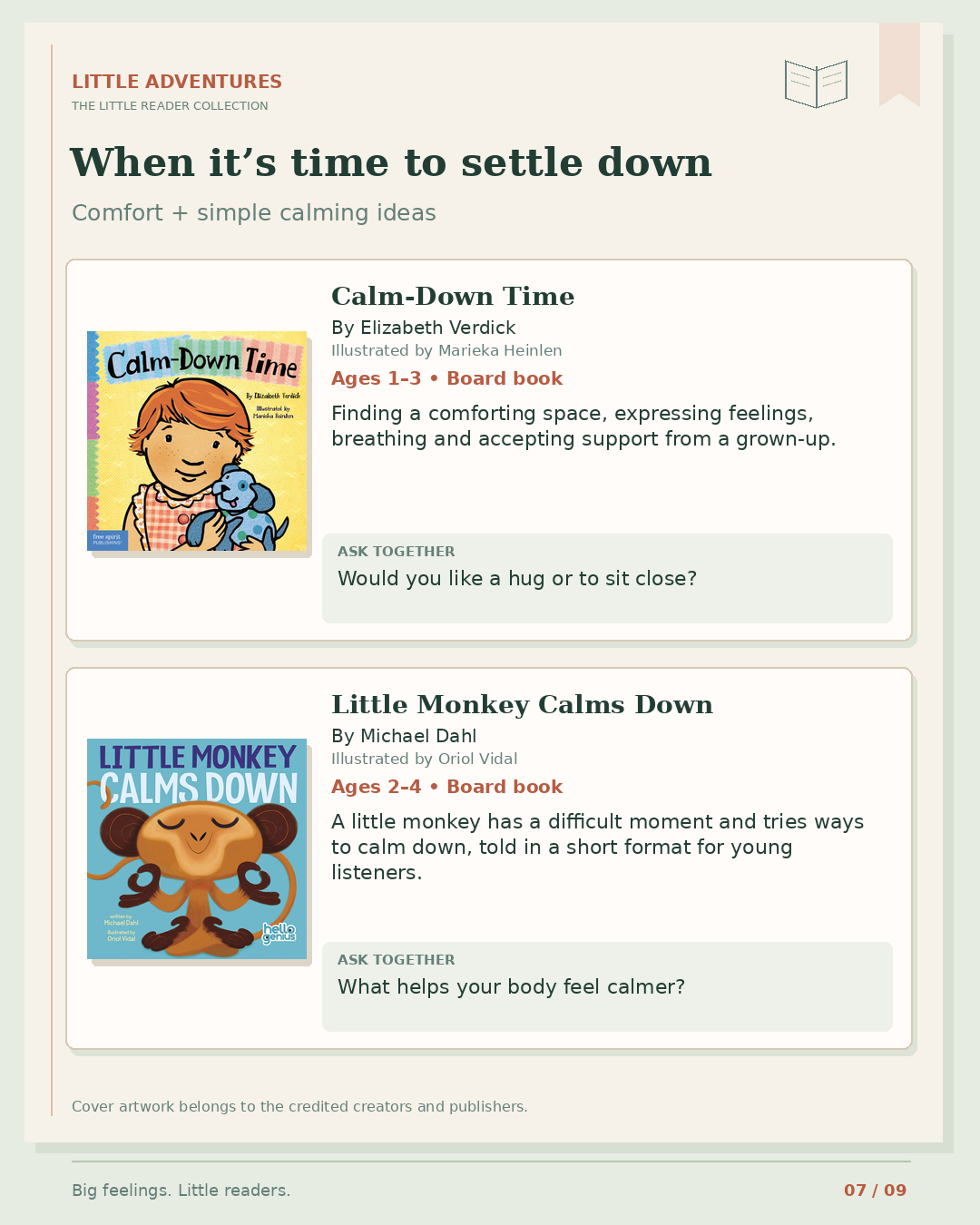
Book detailsComfort + simple calming ideas
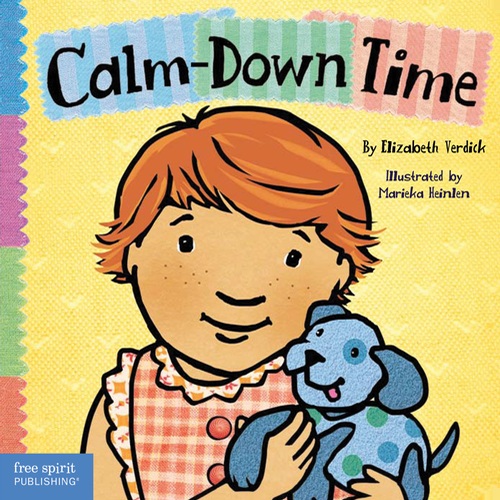
Ages 1–3 • Board book
What it explores: Finding a comforting space, expressing feelings, breathing and accepting support from a grown-up.
Book details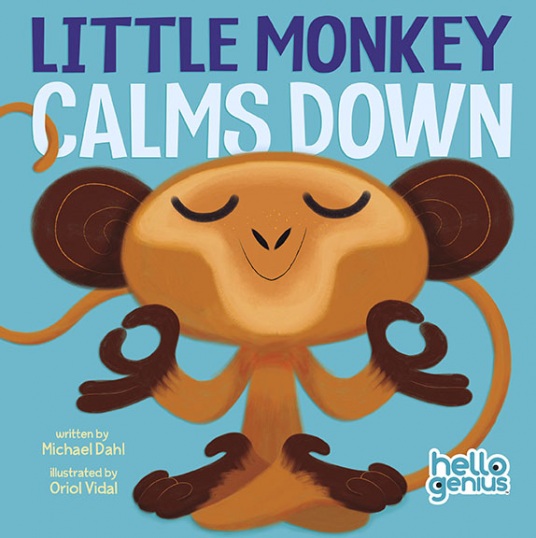
Ages 2–4 • Board book
What it explores: A little monkey has a difficult moment and tries ways to calm down, told in a short format for young listeners.
Book detailsConnection first. Conversation follows.
Read together. Notice feelings. Keep the conversation going. Books can open a conversation; children still need our comfort, guidance and support in the moment.
Cover artwork belongs to the credited authors, illustrators and publishers. Covers are shown to identify the books discussed. Each title links to book information; full cover-source credits are available here.
Sources include the authors’ sites, Penguin Random House, Teacher Created Materials / Free Spirit Publishing, Hachette, Redleaf Press, NetGalley and Publishers Weekly.